Why flatbed pays what it does
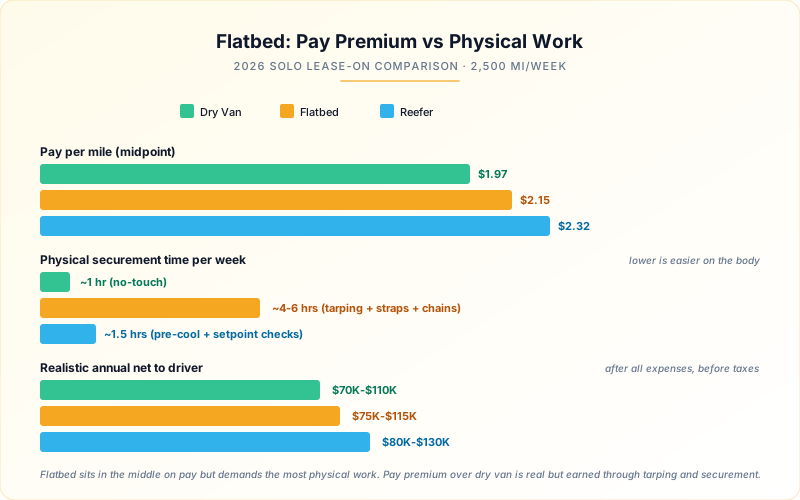
Flatbed commands a $0.15-$0.20/mile premium over dry van for two reasons: the work is harder, and the freight is less commoditized. A dry van driver does no-touch freight — back into the dock, drop the trailer, done. A flatbed driver spends 45-90 minutes per load tarping lumber or steel, another 20-30 minutes strapping and chaining, and often 15-20 minutes on corner protectors and edge guards. That physical work compounds over a week; by Friday, a flatbed driver has spent 4-8 hours on securement that a dry van driver spent driving.
Flatbed freight is also less interchangeable than dry van. Lumber, steel coils, construction equipment, and oversized loads can't shift to a van if capacity tightens — they need an open-deck trailer with qualified securement. That demand inelasticity is what keeps flatbed rates from collapsing even in soft freight markets: when dry van rates bottom out, flatbed typically holds within 5-10% of the median. For owner-operators thinking about multi-year stability, this is meaningful.
Real 2026 settlement math
A realistic weekly settlement for a solo flatbed lease-on driver running 2,500 miles in 2026:
| Line | Amount |
|---|---|
| Gross line haul (2,500 mi × $2.70) | $6,750.00 |
| Fuel surcharge (2,500 mi × $0.50) | $1,250.00 |
| Tarp pay (3 loads × $50) | $150.00 |
| Gross revenue | $8,150.00 |
| Carrier split (22% of gross) | -$1,793.00 |
| Cargo + physical damage insurance | -$185.00 |
| ELD / qualcomm / IFTA / occ acc | -$145.00 |
| Fuel card (~340 gal @ $3.80) | -$1,292.00 |
| Trailer rental (if not owned) | -$280.00 |
| Net settlement to driver | $4,455.00 |
Illustrative. Trailer rental line goes away for driver-owned trailers; for those, the carrier split is typically 3-5 points higher. Tarp pay varies — some programs roll it into the base rate, others pay per-load. Settlement does not reflect personal taxes, truck payment, or maintenance reserve.
Over a 50-week year, that settles ~$222,000 in driver-side net, placing flatbed between dry van (~$198K) and reefer (~$219K) in the honest comparison. Once you factor in the $2,500-$4,500 gear investment that only flatbed requires, first-year realized net is closer to $215K — still comfortably above dry van, below reefer.
The gear investment — what you'll actually buy
This is the line nobody in recruiting talks about. Quality securement gear is the difference between a smooth flatbed year and a year spent patching worn straps and replacing torn tarps. Budget realistically:
- Tarps (4 minimum): 1 smoke tarp ($350-$500), 1 steel/coil tarp ($400-$600), 2 lumber tarps ($300-$450 each). Total: $1,400-$2,100. Replace every 2-3 years under regular use.
- Straps (12-20 minimum): 2-inch straps ($25-$35 each, carry 8-12), 4-inch straps for heavy loads ($35-$45 each, carry 4-6). Total: $400-$750.
- Chains + binders: 8-10 grade 70 chains (3/8-inch, 20-foot, $35-$55 each), 6-8 load binders ($40-$80 each). Total: $600-$1,200.
- Corner and edge protectors: V-boards, corner boards, edge protectors. $150-$250.
- Miscellaneous: Bungee cords, winch handle, tarp repair kit, work gloves, headlamp, ladder. $200-$400.
Total gear startup: $2,750-$4,700. This is straight out of pocket before your first load — carriers don't front it and don't reimburse it. Plan cash reserves accordingly.
Lane economics — where flatbed actually runs
Flatbed freight concentrates in four primary corridors in 2026:
- Southeast → Midwest (lumber and building materials): Georgia, the Carolinas, and Florida ship massive volumes of lumber, trusses, and engineered wood to construction markets in Texas, Illinois, Ohio, and the Northeast. Year-round freight with spring construction-season peak. Typical rates: $2.40-$2.80/mi gross.
- Gulf Coast ↔ Midwest (steel and pipe):Houston, New Orleans, and Mobile are major steel and pipe origins; the Midwest is both a destination (auto manufacturing, machining) and a transshipment hub. $2.60-$3.10/mi gross typical. Year-round with less seasonality than lumber.
- Midwest ↔ West Coast (machinery and equipment):Construction equipment, industrial machinery, and agricultural equipment move in both directions. Rates are lane-dependent and less consistent than lumber or steel. Best suited for drivers with heavy-haul experience.
- Oil and gas corridor (Texas-Oklahoma-North Dakota):Pipe, drilling equipment, frack sand, wellhead components. Rates are boom-cycle dependent — $3.00-$3.50/mi in active drilling cycles, $2.30-$2.60 in down-cycles. Requires oversize/heavy-haul experience and sometimes hazmat endorsement.
Equipment and experience thresholds
- Tractor: 2015+ preferred, 2012+ accepted. Day-cab tractors are more common in flatbed than sleeper trucks for regional lanes; both work for OTR.
- Power: 500+ HP is preferred because heavy-haul loads can push 80,000 lbs gross with little margin. Under-400 HP tractors struggle in mountain lanes.
- Trailer: Either driver-owned or carrier-provided. 48-foot flatbed is the default; step-deck opens up the taller-load freight market; RGN (removable gooseneck) is required for anything over 13'6" tall or heavy-haul up to 150,000 lbs.
- Experience: 18-24 months OTR typical; 6+ months flatbed experience strongly preferred. Some carriers will onboard with only dry van experience but require 2-4 weeks of supervised tarping and securement training.
- Physical ability: Not usually formalized, but the work requires sustained physical capacity for tarping and securement in weather. Drivers with back, shoulder, or knee limitations should think carefully.
Who flatbed lease-on fits
Good fit: Drivers who want the $10K-$15K/year pay premium over dry van, enjoy physical work and varied freight, can commit $3K-$5K to securement gear, have 18+ months OTR experience (ideally with some flatbed exposure), and are physically able to do the tarping and strap work for the multi-year commitment that lease-on implies.
Poor fit: Drivers with chronic back or shoulder issues, drivers who prefer no-touch freight, drivers new to lease-on who should start with dry van to learn the operational structure before adding equipment complexity, and drivers without cash reserves for the gear investment.
Diligence questions specific to flatbed
Beyond the standard lease-on questions (covered in the hub page), flatbed-specific diligence:
- Trailer policy: Do I own it, rent it, or interchange? Who pays for deck repairs, tire replacement, stake pocket damage?
- Tarp pay structure: Flat per-load, percentage of revenue, rolled into base rate, or none?
- Detention on flatbed loads: Flatbed loading/unloading tends to run longer than van freight. What are the detention rules and who bills the shipper?
- Oversize/overweight permit handling: If the lanes include oversize loads, who pulls permits and who pays for them?
- Load securement training: Do they provide orientation on chain counts, strap placement, and WLL working load limits? A carrier that doesn't is outsourcing the liability to you without the knowledge.
- Gear supplementation: Some programs offer a gear stipend or discounted gear through partner vendors. Ask.
Related reading
- Lease-On Program Overview — the hub with decision framework and general diligence.
- Dry Van Lease-On Programs — the lower-friction entry point.
- Reefer Lease-On Programs — the higher-pay alternative with time-sensitivity.
- Flatbed Driver Jobs — if company-driver flatbed fits better than lease-on.
- Owner-Operator Startup Guide 2026 — the standalone-authority path.
Interested in a flatbed lease-on?
Tell us about your experience, your trailer situation, and your timeline. We'll match you with a flatbed program that fits.
Flatbed Lease-On FAQ
How much does flatbed lease-on pay in 2026?
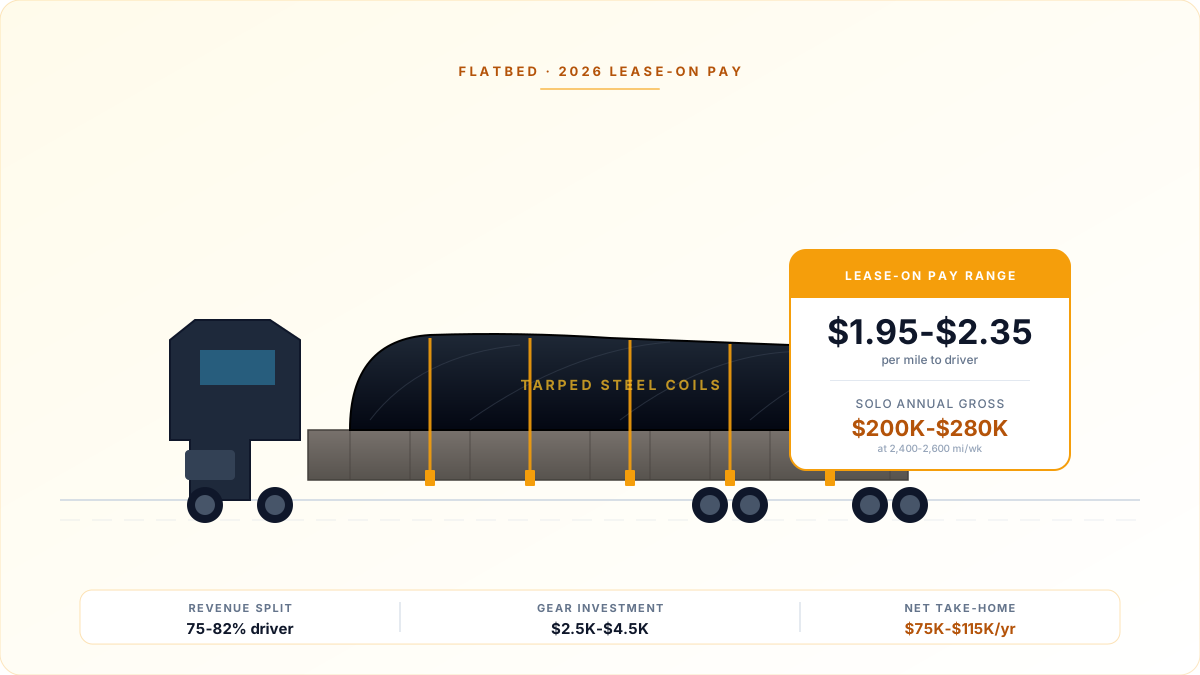
Solo flatbed lease-on programs pay owner-operators $1.95-$2.35/mile in 2026, structured as a 75-82% gross split on average. At 2,400-2,600 miles/week, that's $200,000-$280,000 annual gross for a solo driver. After fuel, insurance, maintenance, and taxes, realistic take-home is $75,000-$115,000 — roughly $5K-$10K more than dry van but below reefer. The premium over dry van exists because flatbed is physically harder (tarping, strap work, securement) and carriers have to compensate to attract qualified drivers.
Do I need my own flatbed trailer for lease-on?
More often than dry van or reefer, yes. About half of flatbed lease-on programs require you to bring your own trailer; the other half provide it or offer trailer interchange. A new 48-foot flatbed is $45,000-$60,000, or $60,000-$85,000 for a step-deck or RGN. Used trailers run $20,000-$35,000. Carriers that require driver-owned trailers typically pay 3-5 points higher on the split to offset your capital commitment. Always confirm the trailer policy — and who pays for trailer maintenance, tires, and deck repairs — before signing.
What equipment and gear do I need beyond the tractor?
Flatbed requires significantly more gear than dry van. Standard requirements: 4 heavy-duty tarps ($300-$600 each for smoke, lumber, and steel tarps), 12-20 ratchet straps (2-inch and 4-inch, $25-$40 each), chains and binders for steel and oversized loads (8-10 minimum at $30-$80 each), corner protectors, edge protectors, V-boards, coil racks if hauling coils, and a proper ladder to access the deck. Budget $2,500-$4,500 for a complete gear setup. Carriers don't typically supply this; it's your overhead.
How long does it take to tarp a load?
A solo driver tarping a full 48-foot lumber or steel load takes 45-90 minutes in good weather, longer in wind or rain. Drivers who do this professionally settle into a 45-60 minute rhythm. Loads without tarping (rebar, pipe, some structural steel) save all that time. This is meaningful for weekly revenue: a driver doing 3-4 tarped loads per week is spending 3-6 hours per week on tarping that a dry-van driver spends driving. Most flatbed carriers pay a tarping stipend of $35-$75 per load to compensate, but it rarely fully offsets the time cost.
What does flatbed typically haul?
The big four flatbed freight categories in 2026 are: lumber and building materials (plywood, lumber, trusses, drywall bundles), steel products (coils, plate steel, rebar, structural beams), machinery and heavy equipment (construction equipment, industrial machinery), and oversized/specialized loads (wind turbine components, transformers, oversized concrete). Lumber dominates volume; steel dominates by revenue per load; machinery and oversized pay the highest per mile but are specialized enough to require oversized permits and routing expertise.
Is flatbed physically harder than dry van or reefer?
Yes, noticeably. Between tarping, strap work, and load securement, a flatbed driver does 1-2 hours of physical work per load that a dry van driver doesn't. Over a year, that's hundreds of hours of tarping, climbing on decks, and muscling heavy straps. Most flatbed drivers accept this as the tradeoff for the pay premium and the satisfaction of hauling visible, heavy loads. Drivers with back issues or chronic injuries should seriously consider whether dry van is a better fit — the physical demand is real.
What CSA violations are most common on flatbed?
Flatbed-specific CSA violations concentrate in cargo securement (load shift in transit, inadequate tiedowns, insufficient tarping, improper chain/binder use) and vehicle maintenance (flatbed trailers are exposed to weather and rougher loading conditions than van trailers, so brake and tire issues surface faster). Regular inspection of straps, chains, binders, and deck condition is essential — worn gear can cause both citations and accidents. Most flatbed lease-on programs provide orientation on proper securement, but ultimately it's on the driver.
Who are flatbed lease-on programs best for?
Flatbed lease-on fits owner-operators who: (1) have 18+ months OTR experience, ideally 6+ months of prior flatbed or equipment-hauling experience, (2) are physically able to tarp and strap heavy loads in variable weather for the foreseeable future, (3) want slightly higher pay than dry van without the delivery-time pressure of reefer, (4) enjoy more varied freight types and active loading/unloading work, and (5) have $3K-$5K cash available for quality tarps and securement gear at startup. Drivers with back issues, who prefer no-touch freight, or who want to minimize physical work should stay with dry van.