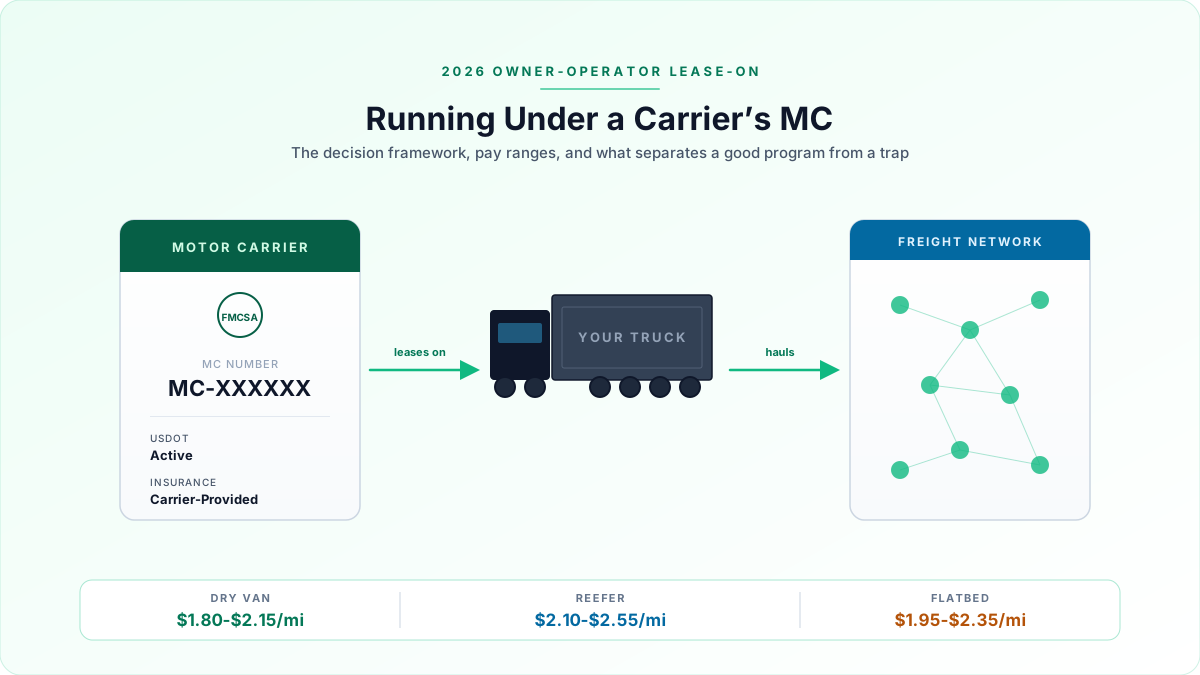
Dry Van Lease-On →
78-85% gross splits, broadest lane network, lowest insurance burden. The default entry path for most new lease-on owner operators.
Solo gross $180K-$260K · net $70K-$110K
Reefer Lease-On →
72-80% splits, higher gross per mile, year-round produce and food freight. More expenses but better top-line for experienced operators.
Solo gross $220K-$310K · net $80K-$130K
Flatbed Lease-On →
75-82% splits, stable pay through soft freight markets, physical work (tarping + securement) in exchange for the pay premium over dry van.
Solo gross $200K-$280K · net $75K-$115K
What a lease-on actually is (and isn't)
A lease-on is a commercial arrangement where you, the owner of a Class 8 truck, operate under an established motor carrier's authority (MC number) instead of your own. The carrier handles load sourcing, broker relationships, cargo insurance, and regulatory compliance. You handle driving, truck maintenance, and day-to-day operations. Revenue gets split by a pre-agreed percentage or per-mile rate.
Crucially, a lease-on is not a lease-purchase. In a lease-purchase, the carrier supplies the truck and deducts weekly payments from your settlement until you eventually own it. Lease-purchases have earned a justified reputation for trapping drivers in upside-down contracts — the payment often exceeds what the revenue supports once fuel and repairs hit, and drivers walk away from tens of thousands in accumulated equity. Lease-on, done right, is a different animal: you already own (or finance independently) the truck, and you're buying access to a carrier's operational infrastructure in exchange for a percentage of gross. This page covers lease-on only.
Why lease-on makes sense in 2026 specifically
In a normal freight market, a competent owner-operator with 2+ years of clean driving can reasonably run solo authority and net more than they would leased on. 2026 is not a normal freight market. Three forces are compressing the independent-authority math at once:
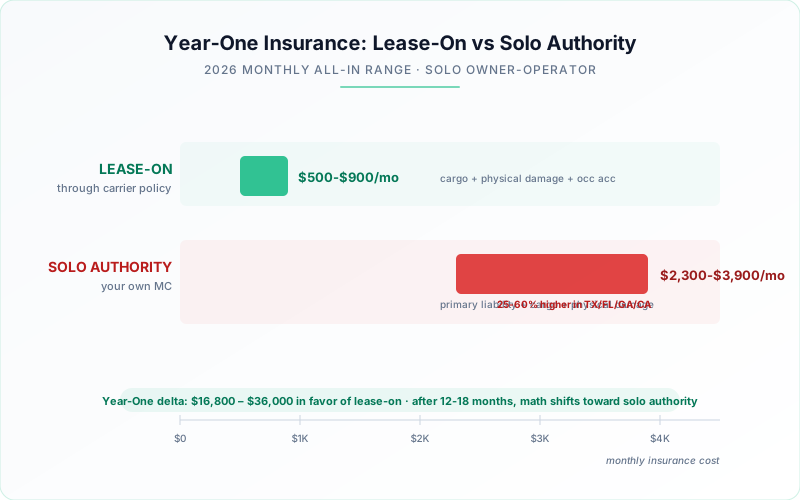
- New-authority insurance is brutal. Primary liability for a one-truck new authority is running $22,000-$38,000/year, with cargo and physical damage pushing the all-in to $28,000-$47,000. That's before any state adjustment for Texas, Florida, Georgia, Louisiana, or California, where plaintiff-friendly legal environments push premiums another 25-60%.
- Broker relationships take time. The highest-paying direct-shipper and established-broker freight flows to carriers with 12-24 months of operating history. A brand-new authority starts on public load boards, competing with thousands of other new authorities for the dregs of what the best freight brokers don't book elsewhere. You're paying top-tier insurance while booking bottom-tier freight.
- Cash reserves get drained fast. Between the insurance premium, the first three months of cash-flow lag waiting on broker payments, and the first serious truck repair, most new authorities burn through $30,000-$50,000 of reserves in the first 90 days. Lease-on bypasses most of this: you settle weekly off the carrier's factoring, the carrier carries primary liability, and your entry cost is essentially just the truck.
The break-even math in 2026 typically favors lease-on for the first 12-18 months for any single-truck operation. After that, if you've kept a clean driving record and zero losses on the loss run, pulling your own authority and running independent starts to pencil because you're no longer priced at new-authority rates.
How the pay math actually works
Almost all 2026 lease-on programs use one of two pay structures: percentage of gross, or per-mile with load bonus. Percentage is more common. Here's the realistic picture:
| Equipment | Typical Gross Split | Avg $/mile to Driver | Solo Annual Gross | Typical Net After Expenses |
|---|---|---|---|---|
| Dry Van | 78-85% / 15-22% | $1.80-$2.15 | $180K-$260K | $70K-$110K |
| Reefer | 72-80% / 20-28% | $2.10-$2.55 | $220K-$310K | $80K-$130K |
| Flatbed | 75-82% / 18-25% | $1.95-$2.35 | $200K-$280K | $75K-$115K |
| Power Only | 82-88% / 12-18% | $1.70-$2.00 | $170K-$230K | $65K-$95K |
Ranges reflect observed 2026 Q1-Q2 lease-on programs for solo operators running 2,200-2,800 miles/week under standard fuel and insurance structures. Team operations typically add 20-35% to gross but also double some fixed costs.
The deductions nobody warns you about
The gross split is the headline number. The real math is the gross split minus everything the carrier deducts weekly. A good carrier discloses all deductions upfront in writing. A bad carrier waits until month 2 to surprise you with new lines on the settlement. Here's what to expect:
- Cargo insurance: $150-$400/month. Almost always deducted from your settlement even though the policy is in the carrier's name.
- Physical damage / bobtail insurance:$200-$450/month if you use the carrier's policy. You can sometimes bring your own policy for less; ask upfront.
- Qualcomm / ELD / tracking: $35-$60/month. Usually non-negotiable.
- IFTA + permit handling: $50-$150/month.
- Drug + alcohol consortium: $10-$30/month.
- Factoring: Typically 0% if the carrier factors internally, or 1.5-3% of invoice if factoring is passed through.
- Occupational accident / workers comp:$150-$350/month depending on state.
- Trailer rental (if you don't own one):$30-$90/day, sometimes waived if the carrier provides trailer interchange.
- Escrow / security deposit: $1,500-$5,000 held by the carrier, typically refunded after your lease ends assuming no outstanding damage claims.
Dry van vs reefer: the honest tradeoff
Most owner-operators stepping into lease-on for the first time default to dry van because it's the lowest-friction entry. Reefer pays more per mile but comes with genuine added complexity. Here's the decision framework:
Dry van wins when: You're in your first 12 months as an owner-operator, you don't have cash reserves for reefer maintenance surprises, you want the broadest lane flexibility, and you want to maximize predictable weeks over top-line revenue. Detailed breakdown in the dry van lease-on guide.
Reefer wins when: You have 2+ years of owner-operator experience and a cash reserve of at least $15,000 for reefer unit repairs, you're comfortable with delivery-time sensitivity (produce and pharma freight is unforgiving), and you want $30,000-$50,000 more annual gross in exchange for accepting that higher ceiling. Detailed breakdown in the reefer lease-on guide.
How to pick a program — the diligence checklist
A well-run lease-on program treats you like a business partner. A badly-run one treats you like a disposable seat. These are the questions that separate them:
- What's the true take-home? Ask for a sample settlement sheet from a real solo driver running dedicated 2,500 miles/week. If they won't share one, that's a red flag.
- Are deductions fixed or variable? A good program publishes a fixed deduction schedule. A bad one has "administrative fees" and "processing charges" that change month to month.
- What's the lane mix? Are you running 48 states, regional, or dedicated? Do they honor home-time requests? How often do you get routed through places where you can't get a backhaul?
- How's the factoring cadence? Weekly is standard. Anything less frequent or with hold-backs over 10% is poor cash-flow design.
- What's the escrow policy? Reasonable $1,500-$3,000 held, documented in the lease, refundable on termination assuming clean equipment.
- Who owns the broker relationships? If the carrier has direct-shipper contracts, you'll see better rates than a broker-only operation chasing load boards.
- What's the contract length and exit clause? 30-day no-cause termination either way is standard and carrier-friendly. Anything tying you to longer than 12 months without cause is predatory.
- What's their CSA score? Pull it from the FMCSA SAFER site. If their Unsafe Driving or Vehicle Maintenance BASICs are above threshold, their carrier DOT is already flagged for inspection pressure — which means more roadside stops for you.
Red flags that mean walk away
- Upfront "activation fees" or "training fees" over a few hundred dollars. Legitimate carriers don't charge you to start.
- Pressure to sign same-day. Good carriers expect you to take the lease home and read it. Bad ones push signature urgency.
- Opaque settlement structure. If you can't explain exactly how your paycheck is calculated after the first sample settlement, don't sign.
- Mixed fleet equipment liability. If their contract makes you liable for their trailer damage even when a second driver is moving your truck, don't sign.
- Non-compete clauses on load sources. Some bad actors try to restrict where you can haul after you leave. Illegal in most states but they'll still try.
- No recent driver testimonials or they won't connect you to current drivers. Honest carriers are proud of their retention. Bad ones hide it.
The questions that make drivers successful
Beyond the carrier selection, the lease-on drivers who thrive (rather than just survive) ask the right questions about their own setup. Have you budgeted for the realistic $15,000-$25,000 truck repair reserve? Have you run the math on whether your own trailer versus the carrier's trailer is cheaper across 18 months? Do you have a plan for the inevitable 3-week slow period in January? Are you comfortable with the fact that a lease-on means the carrier can terminate you with 30 days notice for any reason?
If you're looking at lease-on as a temporary stepping stone toward your own authority (which most thoughtful owner-operators should in 2026), also think about what the lease-on period is doing for you beyond revenue: building clean-driving history, learning how a well-run carrier operates, building a broker reputation that moves with you. Spend the 12-18 months deliberately, and leaving lease-on to run solo becomes a real option. Treat it passively, and you end up stuck.
Related reading
- Owner-Operator Startup Guide 2026 — full walkthrough of the alternative path (your own authority).
- Owner-Operator vs. Company Driver — the deeper income and risk comparison.
- Salary Guide by State — regional pay variation that affects lease-on economics.
- Owner-Operator Career Path — requirements, FAQs, and long-term career trajectory.
Fall 2026 Lease-On Diligence (Quick Pass)
Soft freight and expensive new-authority insurance still push one-truck operators toward lease-on — and still create trap contracts. Before you sign this fall, demand a written fee schedule and a sample settlement.
- Ask for the last 90 days of average weekly settlements for your equipment type (dry van / reefer / flatbed).
- List every deduction beyond the split: cargo, bobtail/physical damage, ELD, IFTA, drug consortium, factoring.
- Confirm exit / notice terms in writing — 7–14 days is normal; 60–90 days with penalties is a walk-away.
- Compare program pages: dry van, reefer, flatbed.
- Cross-check career context in Resources and the salary guide.
Content deepen 2026-09-28 — page title unchanged.
Ready to explore lease-on programs?
Tell us about your equipment, experience, and timeline. We'll match you with a program that fits — dry van, reefer, or either.
Frequently Asked Questions
What is a lease-on program in trucking?
A lease-on program is an arrangement where an owner-operator (a driver who owns their truck) operates under an established motor carrier's authority instead of their own MC number. The carrier handles the MC, insurance, factoring, and load sourcing; the owner-operator supplies the truck, driver, and a portion of their gross revenue in return. It sits between company driving (carrier owns everything) and full independent owner-operator (driver owns everything including authority).
How much does a typical lease-on program pay?
Most 2026 lease-on programs pay the owner-operator 72-85% of gross line-haul revenue, with the carrier keeping 15-28%. The exact percentage depends on whether you bring your own trailer, whether fuel surcharge is included, and what services the carrier provides. On a typical dry-van load paying $2.50/mile gross, an 80/20 split gives the owner-operator $2.00/mile before fuel, insurance, maintenance, and taxes — usually netting $0.50-$0.85/mile after expenses.
Is lease-on better than having your own authority?
It depends on your stage and risk profile. New authorities face 2026 insurance premiums of $22,000-$38,000/year, plus brokerage relationships to build from zero. Leasing on for 12-24 months gives you an insurance umbrella, an established broker network, and a loss-free operating history that makes your eventual standalone insurance renewal dramatically cheaper. Established owner-operators with 3+ years of authority and stable insurance usually net more running independent. The math tips in favor of lease-on in Years 1-2 and typically tips out by Year 3-4.
What's the difference between lease-on and lease-purchase?
A lease-on assumes you already own your truck and you're leasing on your equipment and services to a carrier. A lease-purchase is a rent-to-own structure where the carrier provides the truck and deducts weekly payments from your settlement until you own it. Lease-purchase is riskier — many of these programs trap drivers in upside-down contracts where the payment exceeds what the trucking revenue supports. Look for lease-on only if you already own or can finance your own truck outright.
Does a lease-on driver keep their CDL and safety record separate?
Your CDL is yours for life and moves with you. Your personal driving record (MVR) is yours. But while leased to a carrier, your on-duty driving history is reported against that carrier's DOT number and affects their CSA scores, not yours. This is actually an advantage for owner-operators who want to protect their eventual solo authority: clean lease-on years show as clean driving years but don't build CSA baggage under a DOT number you don't control yet.
What's the typical onboarding timeline for a lease-on program?
Well-run carriers can onboard a lease-on owner-operator in 5-10 business days: MVR pull and PSP check, drug test and DOT physical (if recent ones aren't on file), equipment inspection, paperwork signing, insurance binder activation, and orientation. Carriers that drag onboarding past 3 weeks without cause are usually signaling operational dysfunction — that's a red flag.
Can I run under a lease-on program with my spouse as a team?
Yes, most major lease-on programs support team operations. Team pay is typically 5-15% higher per mile than solo because teams can keep the truck moving 20+ hours/day versus a solo's 11 hours. Team operations also qualify for the highest-paying dedicated lanes (Amazon Relay, FedEx Critical, high-value freight). Both drivers need clean CDLs, medical cards, and recent MVRs.
What fees should I expect beyond the main revenue split?
Typical deductions on top of the revenue split include: cargo insurance ($150-$400/month), physical damage / bobtail insurance ($200-$450/month if you use the carrier's policy), IFTA and permit handling ($50-$150/month), qualcomm/ELD fees ($35-$60/month), factoring (0-3% of invoice), and drug-testing program fees. A well-run carrier discloses all of these upfront; a poorly-run one surprises you with new deductions in month 2.