Why dry van is the default lease-on path
Dry van freight is the largest single segment of US trucking by volume — roughly 60% of all long-haul freight. That volume creates three practical advantages for a lease-on owner-operator: more carriers competing for you, more lanes available in every region, and less weather and seasonal variability than specialized equipment. You also avoid the spikes in repair and maintenance cost that reefer, flatbed, and specialized equipment introduce — a dry van trailer has no reefer unit to break, no tarps to maintain, no specialized rigging.
For an owner-operator stepping into lease-on for the first time, dry van lets you separate the new-to-lease-on learning curve from the new-to-equipment learning curve. You're figuring out the carrier, the settlement math, and the dispatch relationship; that's enough without also learning to manage a $15,000 reefer unit or tarping a flatbed load in an Iowa thunderstorm.
Real 2026 pay structure — the math, not the brochure
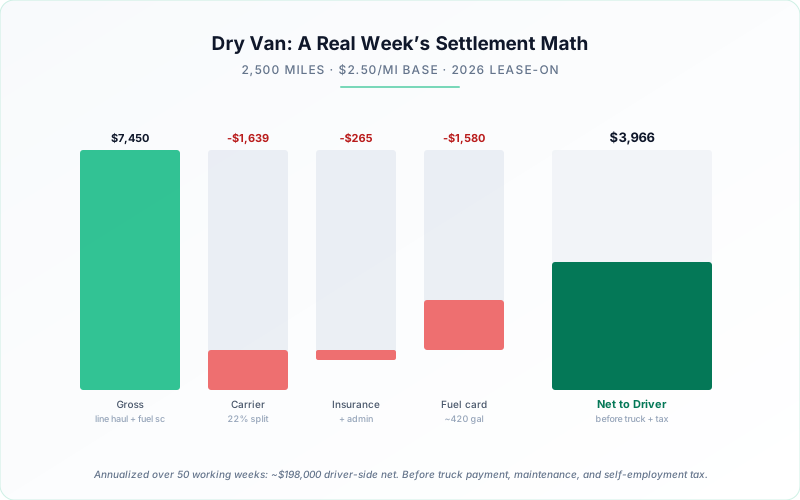
Carrier recruiting pitches talk about gross revenue. What matters is what lands in your bank account after every deduction the carrier takes. Here's a realistic weekly settlement for a solo dry van lease-on driver running 2,500 miles in 2026 at mid-market rates:
| Line | Amount |
|---|---|
| Gross line haul (2,500 mi × $2.50) | $6,250.00 |
| Fuel surcharge (2,500 mi × $0.48) | $1,200.00 |
| Gross revenue | $7,450.00 |
| Carrier split (22% of gross) | -$1,639.00 |
| Cargo + physical damage insurance | -$145.00 |
| ELD + qualcomm + IFTA admin | -$55.00 |
| Occ acc / workers comp | -$65.00 |
| Fuel card (pre-loaded, true-up weekly) | -$1,580.00 |
| Net settlement to driver | $3,966.00 |
Illustrative. Actual settlements vary by carrier, lane mix, fuel efficiency (6.5-7.5 MPG typical), and state fuel tax recapture via IFTA. This before truck payment, trailer rental (if applicable), and the driver's personal taxes.
Over a 50-week year (2 weeks for vacation, sick, truck repair), that settles roughly $198,000 in driver-side gross, from which you still pay truck payment (~$20,000-$35,000/year depending on truck age and financing), maintenance reserve ($8,000-$15,000), health insurance ($6,000-$18,000 if you cover your own), and quarterly self-employment taxes (~25-30% of net profit). Net take-home realistically lands in the $70,000-$110,000 range, which matches the market baseline in the pay table in the overview.
Equipment requirements — what carriers actually want
Most major dry van lease-on programs set these baseline equipment requirements. Programs that accept older equipment will typically do so at a lower revenue split (a 2-3 point penalty is common):
- Tractor age: Model year 2015 or newer is standard. Some carriers allow 2012-2014 with under 650,000 miles. Anything older typically excluded or requires a full DOT inspection before activation.
- Miles: Under 750,000 on the tractor is preferred; 500,000 or less opens the best programs.
- Engine emissions: EPA 2010-compliant is required. Pre-2010 glider kits are effectively non-operational as of 2026 due to CARB and state DOT enforcement.
- ELD compatibility: Your truck must support the carrier's ELD provider (usually Omnitracs, PeopleNet, or KeepTruckin/Motive). This is almost always free to install via the carrier program.
- APU or idle management: Not strictly required but strongly preferred for comfort on long-haul runs. A well- specified APU saves $0.10-$0.15/mile in idle fuel.
- Trailer: You usually don't need to own one for dry van lease-on. Most carriers provide trailer interchange (you pick up their trailers) or rent you one at $30-$60/day.
- DOT inspection: Current annual inspection sticker required at onboarding. Many carriers conduct their own supplemental inspection before activation.
Experience thresholds — who qualifies
Unlike solo authority, where insurance underwriters set the experience bar, lease-on thresholds are set by the carrier and are negotiable. Typical 2026 requirements:
- Minimum CDL-A age: 21 (except for carriers enrolled in the FMCSA apprenticeship pilot; see the under-21 CDL pilot breakdown for the current state of that program).
- OTR experience: 12-24 months of verifiable long-haul driving is typical. A few programs accept 6 months at reduced pay tiers.
- MVR: No more than 2 moving violations in 3 years, no preventable accidents in 3 years, no DUI/DWI in 10 years. Stricter programs (Amazon Relay, FedEx Critical, etc.) set their own higher bars.
- PSP: Must be clean of serious safety violations in the last 3 years.
- Medical: Current DOT medical card, ability to pass DOT drug test, enrollment in a drug and alcohol consortium.
- Work history: 90%+ verifiable employment in the prior 3 years. Gaps over 30 days require explanation.
Lane mix — where dry van actually runs
Dry van lease-on programs generally run one of four lane structures. Ask which you'll be running before you sign:
- 48-state OTR: Broadest geographic coverage, longest stretches away from home (typically 3-4 weeks out, 4-6 days home). Best for drivers maximizing miles without strong home-time preferences.
- Regional dedicated: Usually 500-1,000 mile radius, home weekly or every other week. Revenue per mile typically 10-15% lower than OTR but mileage consistency is better.
- Dedicated lanes (shipper contract): Same origin/destination pair running on a schedule. Predictable, low-stress, often highest net because of reduced deadhead. The most competitive spot — usually reserved for veteran lease-on drivers.
- Expedited / time-sensitive: Shorter, faster, higher rates (often $2.80-$3.40/mile to the driver) but extreme schedule sensitivity. Not for new lease-on drivers.
What to negotiate before signing
These are items that recruiters rarely volunteer but will usually negotiate if you ask. A carrier that refuses to negotiate any of them is telling you they have more drivers than they need — which usually means their driver retention is poor. Every item below is worth asking about:
- Revenue split: Starting offer of 78% is often negotiable to 80-82% for drivers with 2+ years of OTR experience and clean MVR/PSP.
- Escrow: Ask for escrow under $2,000 and documented refund within 45 days of termination.
- Fuel card discount pass-through: Carriers negotiate volume discounts on fuel; not all pass the full discount to drivers. Ask for the actual discount per gallon in writing.
- Detention pay: Standard is $15-$30/hour after the second hour of detention. Some carriers "forget" to bill shippers for detention — ask how aggressively they pursue it.
- Layover pay: $150-$250/day for any HOS-forced layover. Should be documented in the lease.
- Home time guarantee: How often are home-time requests honored? Get this in writing.
- Trailer maintenance: Who pays for trailer repairs, tire replacements, reefer unit repairs (if trailer has one). Should be 100% on the carrier for dry van.
- Contract termination: 30-day no-cause termination either way is standard. Anything longer is carrier-biased.
Who should NOT lease on
Lease-on is the right structure for a specific stage of the owner-operator journey. It's the wrong structure if:
- You want full load-selection autonomy. Even the most open-board lease-on programs still have some dispatch coordination. If you want to book directly with shippers and pick every load yourself, pull your own authority.
- You have 5+ years of clean operation and $40K+ cash reserves. Your math almost certainly favors solo authority at that stage, even in 2026.
- You can't commit to 12+ months.Onboarding, equipment spec-up, and learning a carrier's systems is real cost. Drivers who leave at month 6 rarely come out ahead versus just driving for a company.
- You want to max out hours-of-service.Legitimate lease-on programs run compliant HOS. If you're used to running off-the-clock at a previous carrier, a professional lease-on operation will feel restrictive.
How to compare carriers on paper
If you're narrowing down lease-on offers, score each candidate against these six data points:
- Revenue split + fuel surcharge treatment (how does the math actually work)
- Total weekly deductions (ask for a sample settlement sheet)
- Lane mix and home-time realism (ask to talk to two current drivers)
- CSA score and recent enforcement history(check the FMCSA SAFER site)
- Contract exit terms (is it a 30-day no-cause or tied to something)
- Driver turnover rate (ask directly; anything over 80% annual in the lease-on division is a red flag)
Related reading on TruckingJobsInUSA
- Lease-On Program Overview — the decision framework and hub page.
- Reefer Lease-On Programs — the higher-pay alternative with higher complexity.
- Owner-Operator Startup Guide 2026 — the alternative path (solo authority).
- Dry Van Driver Jobs — if company-driver dry van is a better fit than lease-on.
- Salary Guide by State — how regional pay affects your lease-on math.
Interested in dry van lease-on?
Tell us about your truck, experience, and timeline. We'll match you with a dry van program that fits.
Dry Van Lease-On FAQ
What does a dry van lease-on program pay in 2026?
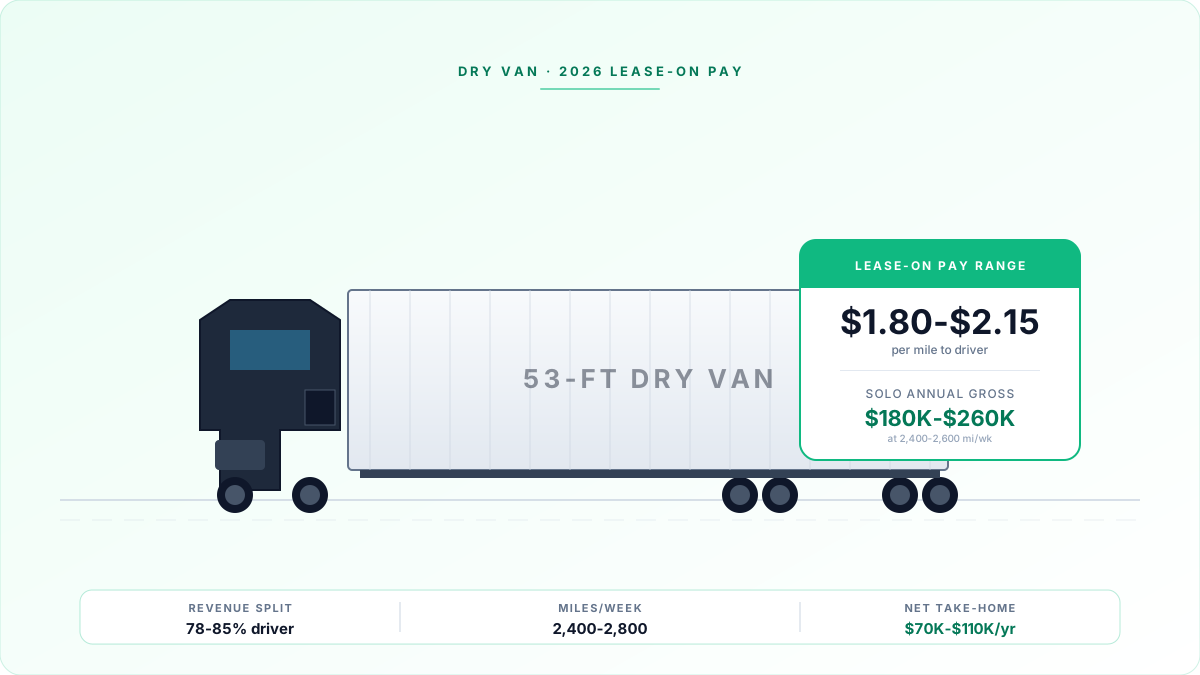
Solo dry van lease-on programs pay owner-operators $1.80-$2.15 per mile on average in 2026, typically structured as 78-85% of the gross line-haul rate. For a solo driver running 2,400-2,600 miles per week at that rate, annual gross comes to $180,000-$260,000 before fuel and expenses. Net take-home after fuel, maintenance, insurance, and taxes typically ranges $70,000-$110,000 depending on lane mix and operating discipline.
What equipment do I need for dry van lease-on?
Most carriers require a Class 8 tractor model-year 2015 or newer with under 750,000 miles, automatic or manual transmission, and EPA 2010-compliant emissions. Some carriers allow older equipment if it passes a thorough inspection. Sleeper berth is required for any non-local lease-on. You usually don't need to own a trailer — most dry van carriers provide trailer interchange (you pick up and drop their trailers) or have trailer rental programs at $30-$60/day.
How many miles per week should I plan for?
The realistic range for a solo dry van lease-on driver is 2,200-2,800 miles per week, with 2,500 being the median target. Hitting 3,000+ consistently requires tight HOS discipline, good lane mix, and minimal home time. The 70-hour/8-day HOS cap puts a physical ceiling around 3,100-3,200 solo miles per week even with aggressive planning. Any program promising 3,500+ solo miles is either misleading or expecting illegal HOS manipulation.
Do I need my own MC number to lease on as dry van?
No. A lease-on means you operate under the carrier's MC, not your own. If you already have your own MC, most carriers will have you place it in inactive status during the lease period. You keep your USDOT number (that's yours for life as a property owner) but operate under the carrier's authority while leased. When the lease ends, you can reactivate your MC or continue under theirs.
What's the difference between dry van lease-on and lease-purchase?
Dry van lease-on assumes you already own or finance your truck independently. You're leasing your equipment and services to the carrier in exchange for a revenue percentage. Lease-purchase is a rent-to-own structure where the carrier supplies the truck and deducts weekly payments. Most seasoned owner-operators avoid lease-purchase — the payment structure frequently exceeds what the revenue supports once fuel and maintenance hit, and drivers walk away from accumulated equity. If you're considering lease-on, financing your own truck separately and leasing on your services is typically the better math.
What insurance do I pay for in a dry van lease-on?
Primary auto liability is carried by the carrier under their MC — that's the biggest cost you avoid versus running standalone authority. You typically pay for: cargo insurance ($150-$300/month, usually included in the carrier's policy and deducted), bobtail / non-trucking liability ($40-$80/month for personal-use coverage), physical damage on your own truck ($200-$450/month depending on truck value), and occupational accident or workers comp ($150-$300/month). Total insurance deduction from your settlement typically runs $500-$900/month — significantly less than the $22,000+/year standalone primary liability.
Can I pick my own loads or does dispatch assign them?
It varies by carrier and program tier. Open-board carriers let you pick loads from their available freight. Dispatched programs assign you loads based on your location, home-time preferences, and available freight mix. The best hybrid programs are 'preferred lane' structures where you work with a dispatcher to establish 2-3 dedicated lanes and pick supplementary backhauls from the open board. If you want full freight-selection autonomy, standalone authority is the only path — lease-on always involves some level of load coordination.
How do fuel surcharges work in dry van lease-on?
Most 2026 lease-on programs pass 100% of fuel surcharge through to the owner-operator on top of the base line-haul split. A few pass only a percentage (often 80-90%) or roll fuel surcharge into the base rate — both are worse for you and worth negotiating against. Ask explicitly: 'On a load paying $2.50/mile base plus a $0.45/mile fuel surcharge, what's my per-mile settlement?' If the answer isn't roughly (base × split%) + surcharge, the program is shortchanging you on fuel.